'Sorry, Baby' needn't apologise.

Before the screening of Sorry, Baby, A24’s latest indie darling that’s been exploding around the festival circuit, Eva Victor, writer, director, and lead (that must feel good to list out), said that she wanted the film to feel more like a hug than a shock. It’s an interesting, foreboding way to open this year’s Edinburgh Film Festival, one that primes you for a gentle story that balances the abruptness of whatever is to come with a sentimentality, almost a promise that in the end it’ll be okay. So played Victor’s startling debut, a movie that’s as able to make a child divorce joke as it is to reckon with the horrors of living with sexual assault, a sublime piece of tonal dexterity, and a total laugh riot. And I haven’t even mentioned the cat.
Agnes (Eva Victor) is an English major who has just become the youngest full-time professor in 50 years. She lives alone in a detached house in the middle of nowhere with her grey cat, her stacks and stacks of books, and Gavin (Lucas Hedges), her neighbour, who sometimes gives her lighter fluid. It sounds wonderfully idyllic, except there’s a problem: she feels as though time has stopped; she’s unable to look to the future because something horrific happened in her past. With the help of her recently pregnant friend, Lydie (Naomi Ackie), she tries to confront what happened and move on to something better and new.
What most surprised me is the patience. The opening shot of her home, alone in the darkness, held and held and held and became a recurring motif throughout the film: blackened-out doorways and lights on through the glass. And these moments never so much slowed the film down as they did punctuate it, as you learn while watching, with this event. Sorry, Baby is an otherwise dark comedy with a lingering sense of dread for an event Victor purposely never actually dramatises, and it’s only while the rape is happening that the audience becomes savvy to why Agnes is so wary of seemingly normal suburban living. Watching her walk out of his house, stumbling, clearly disoriented, it becomes blindingly clear that something is wrong, and homes quickly become houses, depersonalised, and turgid.
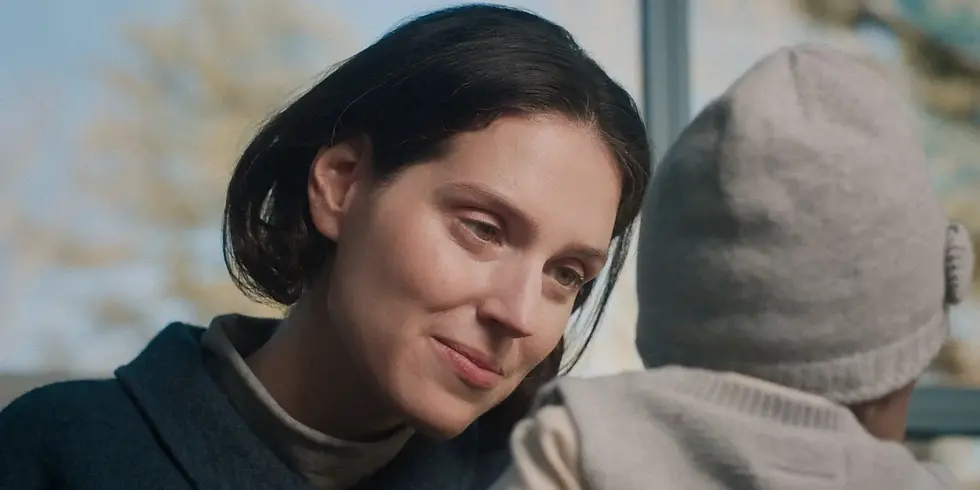
This is following what may as well be 30 minutes of sex jokes, and that Victor is able to wield that shift is staggering. She’ll go from mocking how men ask women if they ‘like it’ during sex to discussions of suicide to watching a jealous woman have a nervous breakdown at dinner over a fish bone. It’s a trapeze act of the highest calibre. The script, written by Victor herself, feels like a labour of love. There are so many callouses, so much of the awkward, stunted dialogue clearly coming from bruises she herself suffered, and Agnes’ wry, frankly unaware persona slowly shifts from being a loveable quirk of hers to a symptom you can’t help but tear up at, one that Lydie has recognised since the beginning in her subtle, knowing glances.
What’s even more interesting is how personable her attacker is written: Preston Drecker (Louis Cancelmi) – almost too fitting a surname. This is not some snarling, moustache-twirling cliche, some frat boy, or someone who is overtly antagonistic. Until the event happens, from which point we never see him again, he’s seemingly kind and charming. Every one of the other students likes him. Everyone else in the faculty, hell, an audience is almost by design meant to like him. He finds Agnes ‘extraordinary’. And in one of the most revealing single lines in the whole movie, describing what happened afterwards, Agnes says, ‘He looked scared.’ It’s a testimony to the maturity of the movie and its writing that it has the confidence to take that leap.

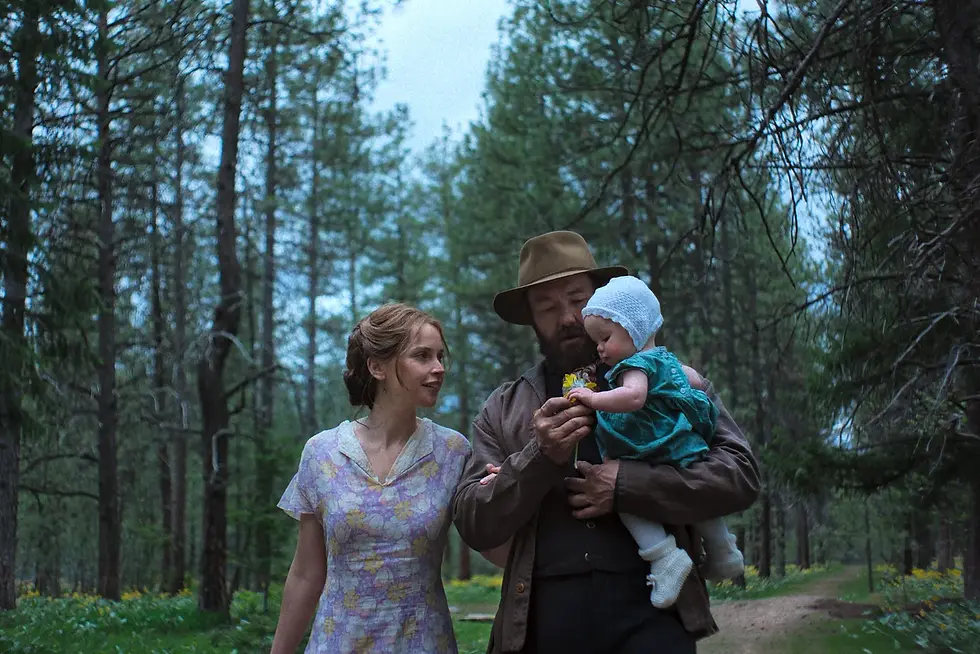
Similarly, that structural conceit is tremendous. The title of the movie could just as easily be ‘The Girl Who Leapt Through Time’, as you watch different snippets from different years of Agnes’ life just blend together. Specifically, that jury scene, in which Agnes’ witticism catches the lawyer off guard, or the sandwich scene, with one of the great single-scene performances of the year from John Carroll Lynch, in which positive masculinity is shown by making one hell of a meat butty and shouting derogatorily at other men. And the sentimentality of the baby scene might reach a crescendo a little too saccharine, but it’s earned that piece of the pie.
This is really tremendous work from a director with boundless potential, and an actor with so much to give. Her next can’t come fast enough. Oh, and the cat is really cute.


Comments